
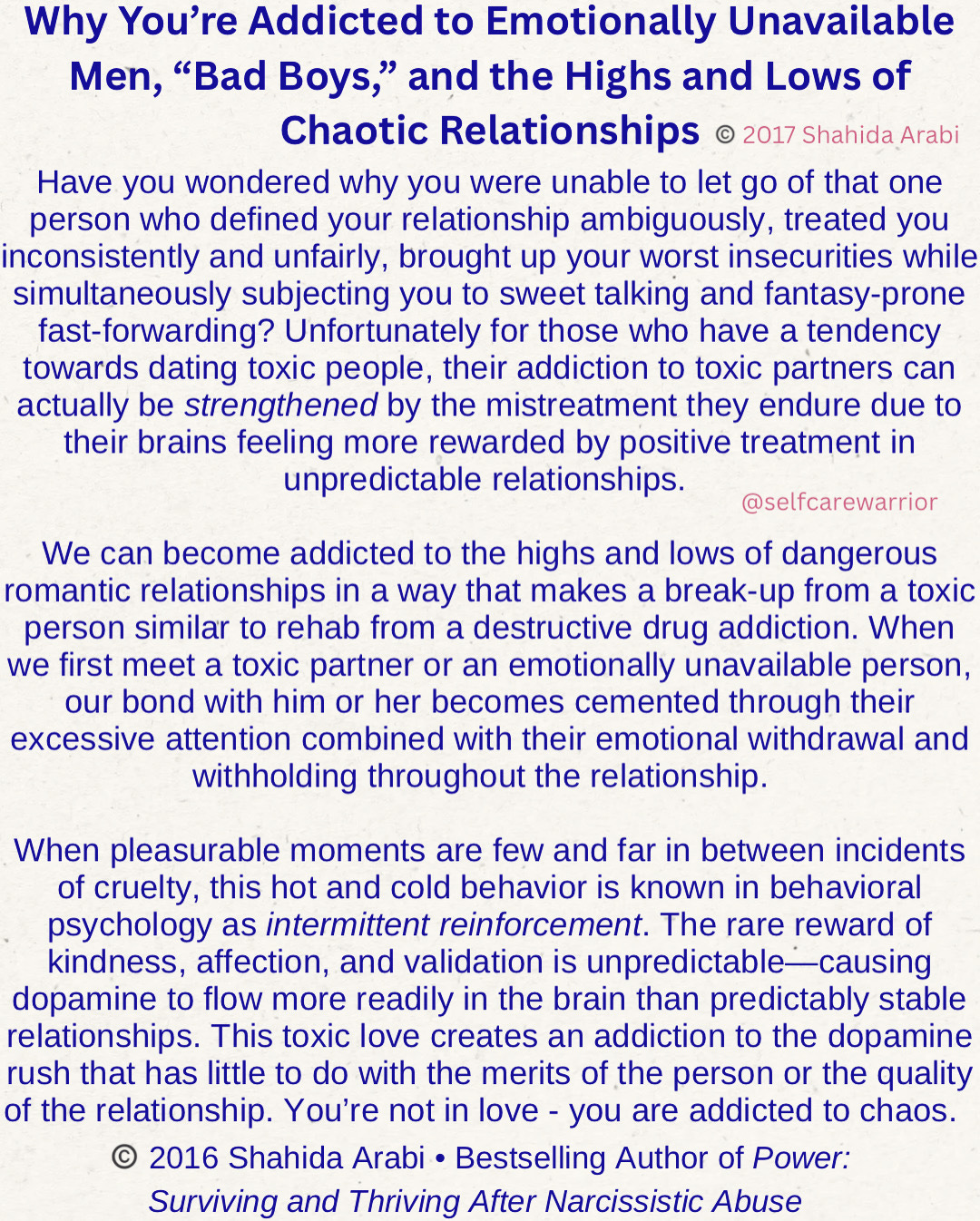
In 2016, I wrote a viral article called “The Real Reason Why We Love Bad Boys, Toxic Partners, and Emotionally Unavailable Men,” one of the first to go in-depth into why our brains become so addicted to the chaotic highs and lows of toxic relationships.
It was also published in my 2017 book Power and made many women and even some men realize that they were actually addicted to chaos and unpredictability and not that they were in love with a shady partner. This addiction is not about the merits of the toxic person you’re entangled with but rather a trauma bond created out of a power imbalance, betrayal, and intermittent reinforcement.
The dopamine rush is strengthened by the unpredictable nature of such relationships and by the powerful biochemical cocktail that is created in unpredictable, toxic love.
Toxic people wreak havoc on our lives, our bodies and our brains. The reasons women are attracted to “dangerous bad boys,” toxic people and emotionally unavailable partners are not just emotional and psychological – they are downright biochemical. The truth of the matter is, our brains can be rewired to fixate on people who aren’t good for us.
Emotionally unavailable men, narcissists, psychopaths, and pickup artists alike all depend on these effects to get us hooked. We can become addicted to the highs and lows of dangerous romantic relationships in a way that makes a break-up from a toxic person similar to rehab from a destructive drug addiction.
When we first meet a toxic partner or an emotionally unavailable person, our bond with him or her becomes cemented through their excessive attention combined with their emotional withdrawal and withholding throughout the relationship. The knowledge of what a toxic partner does to our brain makes it more likely for us to cut back on our investment on those who we perceive may not be a good fit earlier on, detach from any attachments we may already have to toxic people and realize that the powerful bond that’s been created has arisen from our biochemical bonds, not our true standards. A break-up with a toxic person who has mistreated you throughout the relationship compounds this effect and makes it that much more difficult to recover from.
These are a few main neurochemicals and hormones involved which make for a powerful cocktail of attachment that have little to do with the merits of the person you’re dating and everything to do with their shady behavior. If you’re immersed in a cycle of toxic, dysfunctional relationships or dating encounters with emotionally unavailable, emotionally immature, avoidant, or toxic and narcissistic people, you may wonder why you find it so difficult to detach. Part of the reason is biochemical.
Toxic love can create dysfunctional, addictive attachments we develop with people who are unhealthy for us. If you suspect you’re in a dysfunctional rather than a partnership with a healthy partner, understanding why this toxic relationship can feel so addictive to our brains and “meant to be” can be helpful to breaking ties and protecting yourself.
The cycle of trauma bonding with a toxic person, a narcissist, or even a psychopath is biochemically addictive due to the brutal highs and lows and the unpredictable nature of the chaotic relationship. When pleasurable moments are few and far in between incidents of cruelty, this hot and cold behavior is known in behavioral psychology as intermittent reinforcement. The rare reward of kindness, affection, and validation is unpredictable—causing dopamine to flow more readily in the brain than predictably stable relationships. This toxic love creates an addiction to the dopamine rush that has little to do with the merits of the person or the quality of the relationship.
Research reveals that the brains of people reeling from tumultuous romantic relationships and heartbreak tend to show heightened activity in the same reward and craving related regions of the brain as in the brains of those addicted to cocaine and other drugs. This “withdrawal” effect is potent in romantic adversity and is part of the reason so many struggle to leave and heal from toxic relationships.
You will realize that it is not the merit of the person keeping you tethered to this dating partner, but rather the physiological and biochemical nature of toxic love.
The next time you feel unwittingly tethered to a toxic or emotionally unavailable person, understand that you are experiencing what is akin to addiction, not love.